

Crabgrass got you crabby?
Learn more about its biology to help hone your management strategies.
Many odd grasses growing in a lawn are casually referred to as crabgrass, but the danger in treating all odd grass species the same is that they may have different lifecycles and require different tactics for successful control.
In Michigan there are two primary species of crabgrass, smooth crabgrass (Digitaria ischaeum) and large or hairy crabgrass (D. sanguinalis). To determine if you have one of these real-deal crabgrasses, look for these characteristics:
- Light/bright green color. Color is influenced by environmental conditions and personal perceptions, but in general the crabgrasses are typically a lighter or brighter green color than our typical cool-season turf grasses (i.e., Kentucky bluegrass, ryegrasses and fescues) (Photo 1).
- Thick leaf blades. Both crabgrasses usually have thicker leaf blades than our turf grasses (Photo 1).
- Rolled vernation. Leaves are rolled as they emerge from the sheath (like a rolled-up newspaper or magazine unfurling) (Photo 2).
- Membranous ligule. Peel the leaf back, and right where it meets the sheath there is a thin clear/white membrane structure (Photo 3).
- No rhizomes. If you dig up crabgrass it has fibrous roots, no underground stems.
- No real stolons. While crabgrasses do not have trailing stems that can root on the soil surface, you will occasionally see a large plant rooting at a node.
- Hairs, maybe, maybe not. Large or hairy crabgrass has profuse hairs along the leaves and stems. Smooth crabgrass, while mostly smooth may still have occasional hairs.
- Flowers and seedheads. flowers and seeds are formed on finger-like structures late in the summer (Photo 4).

Photo 1. Smooth crabgrass has thick leaf blades that are often lighter or more yellow in color than our typical cool season lawn grasses. Photo by Erin Hill, MSU.
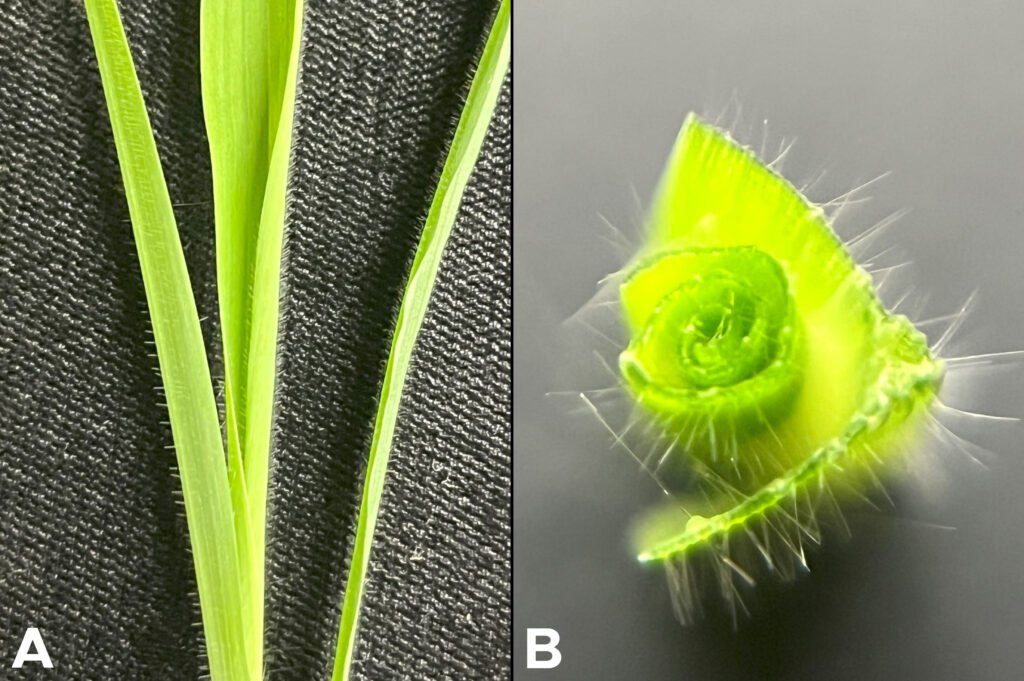
Photo 2. Crabgrass leaves, like the large crabgrass pictured here, are rolled in the sheath and appear to unfurl like a piece of rolled up paper as they expand (A). A cross-section of the sheath shows leaves swirled in the bud (B) as opposed to folded as seen in some other grasses. Photo by Erin Hill, MSU.
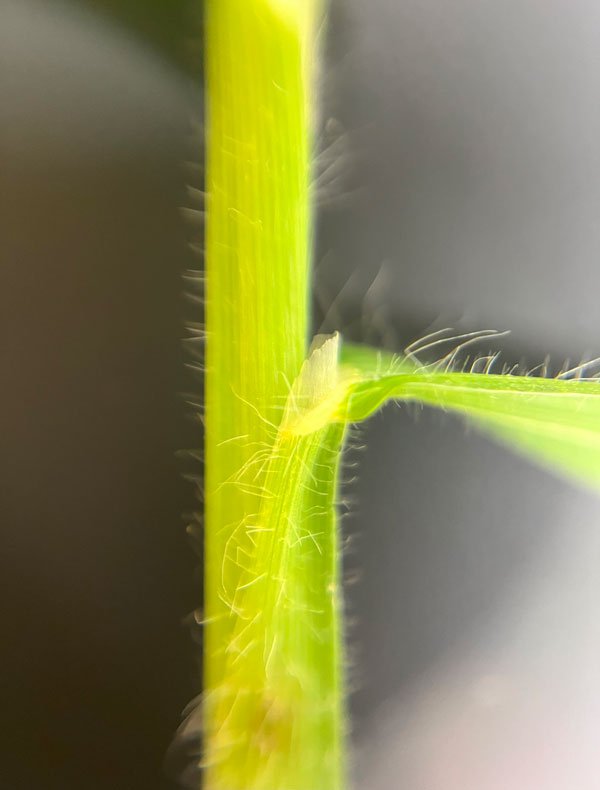
Photo 3. At the base of the crabgrass leaf where it meets the sheath is a translucent, membranous structure called a ligule. Photo by Erin Hill, MSU.
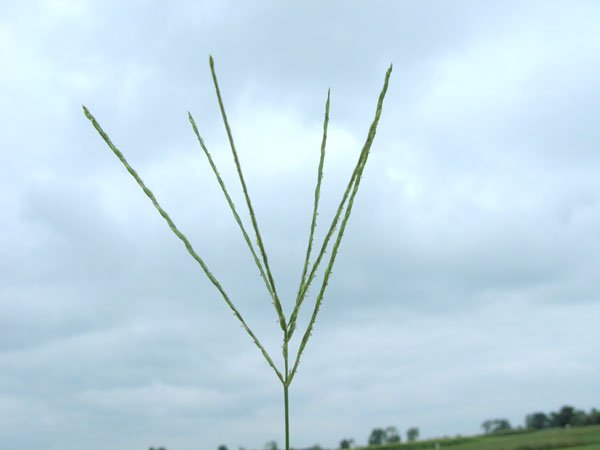
Photo 4. Seedhead structure of large crabgrass. Photo by Erin Hill, MSU.
Both crabgrasses are annuals, which were introduced to the state of Michigan. As annuals, they typically germinate from seeds in the early spring, then flower and produce seeds in the late summer before dying; next spring the process starts again.
Managing the two species is thus far the same, so they will be referred to jointly as crabgrass for the remainder of the article. As described with other grasses in this series, managing crabgrass can present challenges due to the similarity in biology to our desired cool-season grass species.
Prevention
According to research by Masin et al. (2006), crabgrass seed survives in the soil in a lawn setting for up to 3 years, so preventing crabgrass from going to seed can have a relatively rapid impact on the issue in future seasons.
Crabgrass seed (Photo 5) may also be making its way into your property from outside sources. Some actions you may be able to take to prevent this include purchasing certified weed-free grass seed when you replant areas, cleaning equipment used elsewhere before it comes to your lawn to prevent seed hitchhikers, and preventing crabgrass plants in your ornamental beds (Photo 6) or along property lines from going to seed. Most of these single plants can be easily pulled or dug out by hand. Wildlife entering your lawn with seeds on their fur or deposited with their feces may not be as easy to prevent, so keeping your eyes open for odd looking grass can help you gain control before it becomes a serious problem.
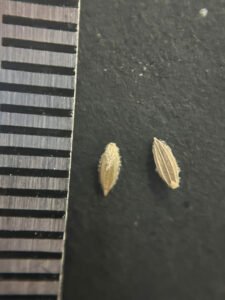
Photo 5. Large crabgrass seeds; tick marks are spaced at 1 mm. Photo by Erin Hill, MSU.
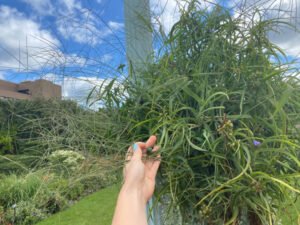
Photo 6. Crabgrass growing undetected in a hanging basket can be a source of seeds entering the surrounding turf grass and landscape. Photo by Erin Hill, MSU.
Cultural Controls
Anything that can be done to favor the health of your desired grasses and avoid having gaps in the canopy will create a lack of space for crabgrass to emerge and thrive. These practices include choosing the best grass species or blend for your conditions, using an appropriate seeding rate, raising your mowing height to a minimum of 3 inches, watering when the weather is dry and boosting the system with fertilizer. You can find more information on these practices at the links and on Michigan State University Extension’s Home Lawns and Smart Lawns websites.
Herbicides - Early spring, before emergence
Because crabgrass must go through the seed stage of the lifecycle every spring, there are some preemergence herbicides that can target this vulnerable stage. Timing of these applications is critical to have the herbicide present at the correct time and inhibit successful emergence. To see what timing is appropriate for your specific area, visit our article, “Timing preemergence herbicides in the spring.”
When it comes to choosing a product, there are several options out there. Those most commonly available to residential users all have active ingredients that target seedling root elongation and many come packaged with fertilizer.
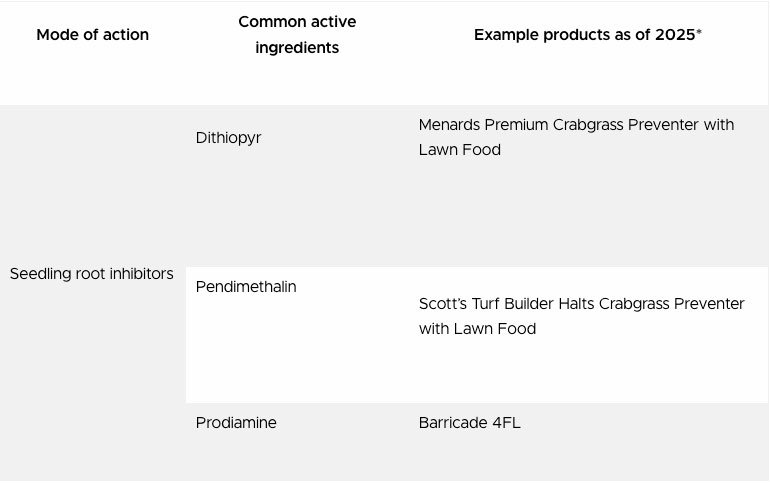
*Product names and active ingredients frequently change, so always be sure to read the label and look for the active ingredients (usually in one of the front lower corners in tiny print).
When applying a preemergence product, note that irrigation or rainfall is needed to activate the herbicide. See the label for more details.
Using the preemergence herbicides mentioned above is not compatible with reseeding areas of your lawn as the herbicide will also inhibit the successful germination of your desired grass seed. Please refer to the label for the wait time between herbicide application and replanting. There are a limited number of products with the active ingredient mesotrione that are intended to prevent the germination of crabgrass and broadleaf species emerging from seed at the time of seeding or renovating a lawn. Pay special attention to label details on the grass species with which these products can be used.
This article was published by Michigan State University Extension. For more information, visit https://extension.msu.edu. To have a digest of information delivered straight to your email inbox, visit https://extension.msu.edu/newsletters. To contact an expert in your area, visit https://extension.msu.edu/experts, or call 888-MSUE4MI (888-678-3464).